


Discover the unique lifestyle of amphibious hippos
During our wildlife explorations, our educational guides will meet you. For an hour, our explorer-guides will be present in the walkways to facilitate observation, answer your questions, separate fact from fiction, and reveal the unique characteristics of the animals. Observation becomes more engaging and accessible thanks to tangible examples: feathers, fur, footprints, eggs, skulls, and many other natural treasures.
Hippopotamus amphibians are among the most impressive animals in Africa, but their way of life often remains unknown. Semi-aquatic, they spend most of the day submerged to protect themselves from the heat, before traveling several kilometers at night to feed.
Did you know that a hippopotamus can hold its breath for up to five minutes? Or that its eyes, ears, and nostrils are located on the top of its head, allowing it to remain almost entirely underwater while monitoring its surroundings? Our guides will help you decipher their behavior, their astonishing vocalizations, their social organization, and the physical adaptations that make them giants perfectly suited to life between land and water.
This exploration is also an opportunity to discuss conservation challenges: habitat degradation, conflicts with human activities, dwindling water sources, and the international programs working to protect this iconic species.
This experience is designed to help you discover the species. There are therefore no animal feeding sessions planned.
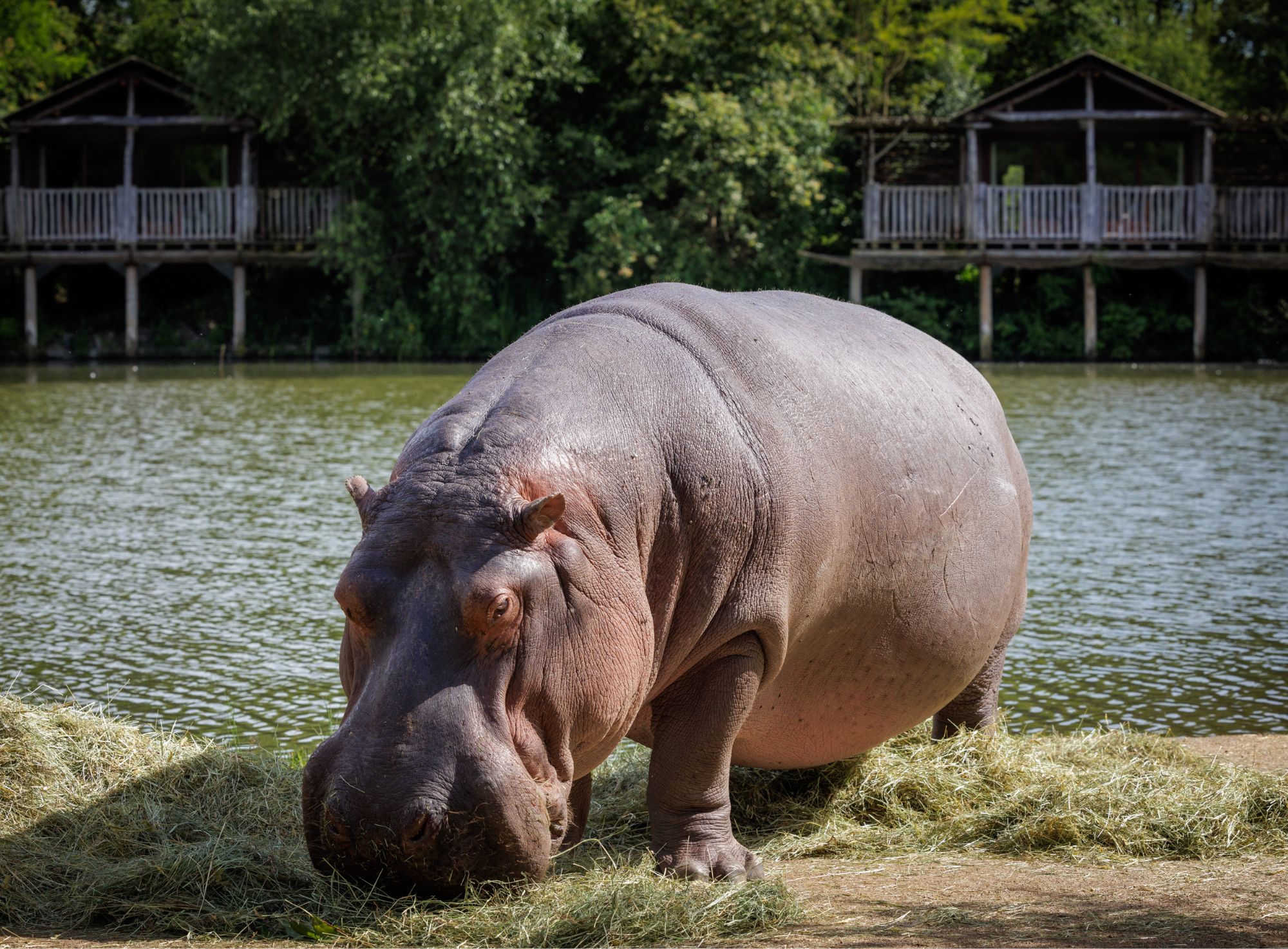
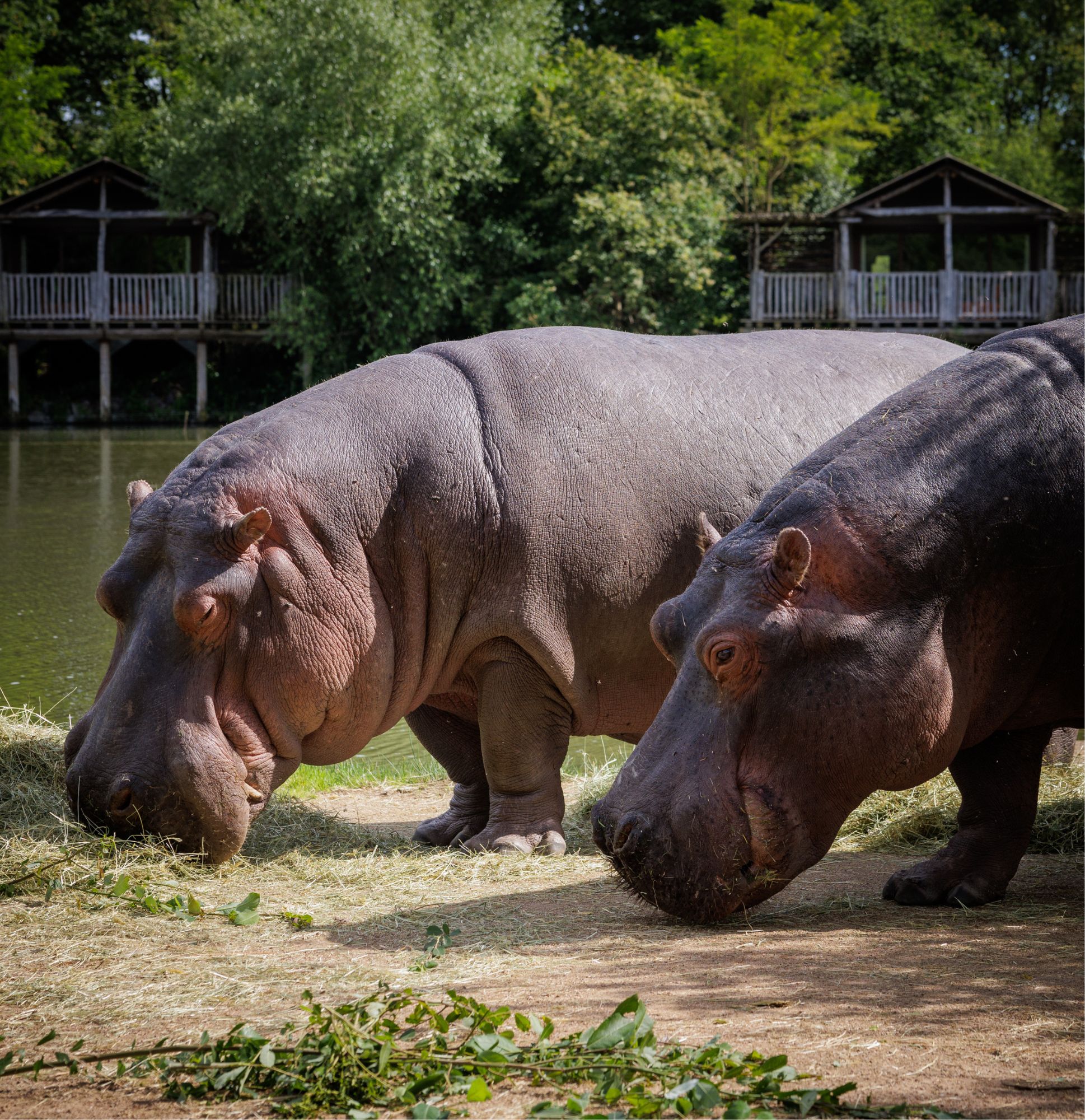

Despite their appearance as aquatic giants, hippos don't really swim. Their bodies are too dense to float: they move by walking or trotting along the bottom of the water, with their feet on the ground.
