


From Asia or Africa, very different elephants
During our wildlife explorations, our educational guides will meet you. For an hour, our explorer-guides will be present in the walkways to facilitate observation, answer your questions, separate fact from fiction, and reveal the animals' unique characteristics. Observation becomes more engaging and accessible thanks to tangible materials: feathers, fur, footprints, eggs, skulls, and many other natural treasures. Elephants are among the world's most iconic animals, but Asian elephants often remain less well-known than their African cousins. Their bodies and ears are generally smaller, they have a more rounded back, two humps on their heads, and a single "finger" at the end of their trunk.
Did you know that they live in family groups led by an experienced female, called a matriarch? Or that they communicate using very low-pitched sounds, sometimes inaudible to the human ear, capable of traveling several kilometers?
Our guides will help you decipher their social behaviors, movements, subtle interactions, and the incredible capabilities of their proboscis, a truly multifunctional tool.
This exploration also provides an opportunity to discuss conservation challenges: habitat loss, forest fragmentation, conflicts with human activities, as well as international programs working to protect this endangered species.
This experience is designed to help you discover the species. There are therefore no animal feeding sessions planned.

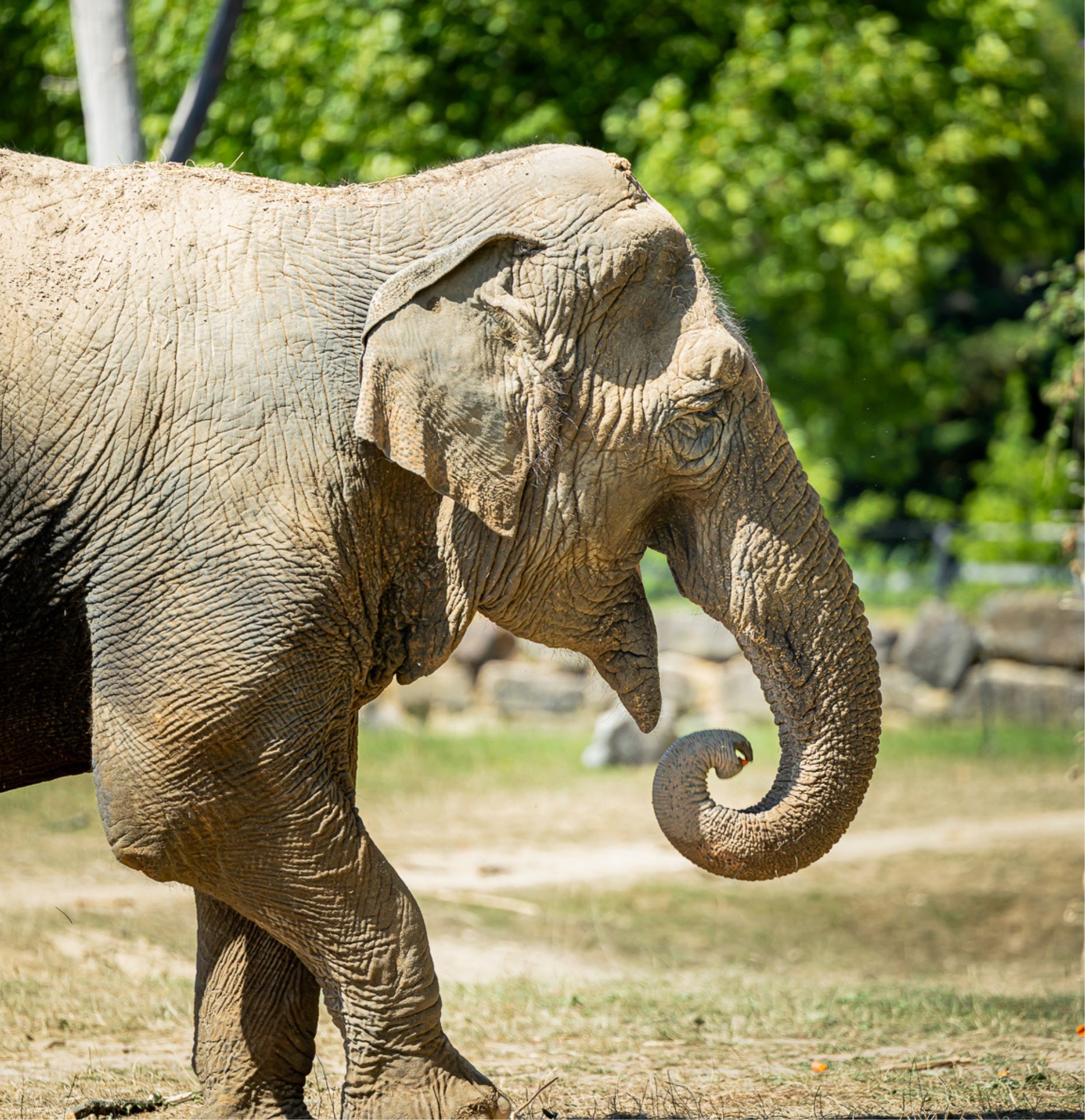

Elephants' feet aren't just for walking; they're also sensitive to ground vibrations. Infrasound, those very faint sounds elephants produce when walking or calling, travels through the ground. Recent studies suggest that these feet allow elephants to detect the vocalizations and movements of other herds at a distance of up to 30 km.
