


Il n'a pas besoin d'exposition parfaite.
Lonicera pileata is very different from the wood honeysuckle, which is usually grown as a climbing plant. The cup-leaved honeysuckle lacks the exuberance and lushness of its cousin. It is a slightly creeping shrub that responds very well to pruning. It can be used to form hedges, in flower beds, or as a specimen plant. It has a very high tolerance for pollution, which is why it is often found in urban areas.
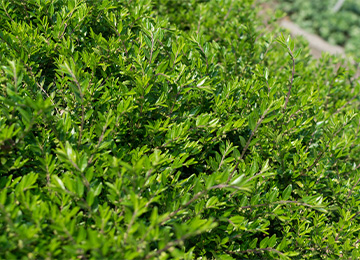
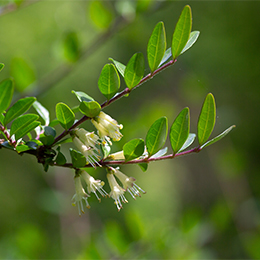
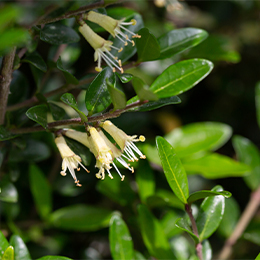
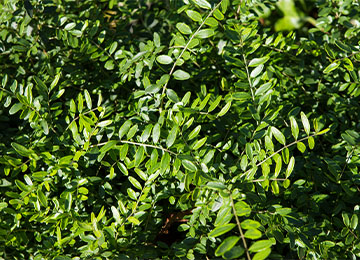
The cup-leaved honeysuckle is a substitute for the common boxwood, which is suffering massive die-off caused by the “box tree moth.” This caterpillar, native to the Far East, was accidentally introduced to Europe in the 2000s. First spotted in France in 2005, it had spread throughout the entire country within a decade.
This caterpillar feeds exclusively on boxwood, consuming both its leaves and bark. That is why we have gradually replaced common boxwood with cup-leaved honeysuckle.

I'm used for topiary. This involves pruning shrubs for decorative purposes to create geometric shapes or even sculptures out of plants. Some artists even manage to create shapes like dragons.
