


Undisputed stars of urban gardens.
The diversity of their foliage, depending on the variety, and especially their ability to change color, make Japanese maples exceptional. They are undisputed stars of small urban gardens and shaded terraces in Japanese, contemporary, or zen styles.
They tolerate pruning and cultivation as bonsai very well
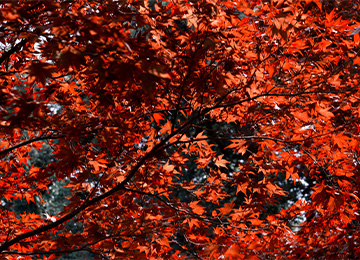
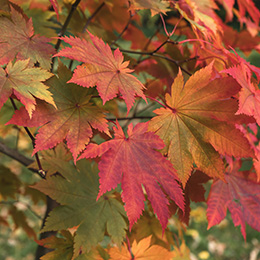
In spring, the softness and poetry of their leaf colors range from orange-pink to gentle golden yellow. As the seasons progress, they display a full palette of tones, culminating in an infinite range of reds in autumn. Once fallen, the leaves form a carpet so rich in warm colors that painters and artists around the world can draw inspiration from it.

Its common name, Japanese maple, comes from the geographical origin of its classification, which was made by the Swedish naturalist Carl Peter Thunberg. It was introduced to Europe in 1864.
