


An ornamental tree
Maclura pomifera, or the Osage Orange, originally owes its name to the hunting grounds of the Osage, a Native American tribe of the North American plains. This vast area covered what is now part of Missouri, Oklahoma, and Texas. Osage is also the name of a river, a tributary of the Missouri: it was there that the Osage Indians had semi-permanent villages. The Osage Orange arrived in France—specifically in Montpellier—in the 19th century.
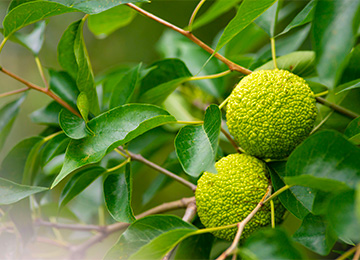
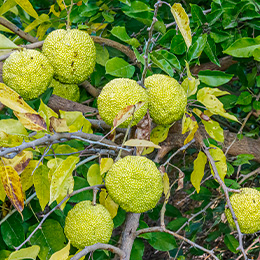
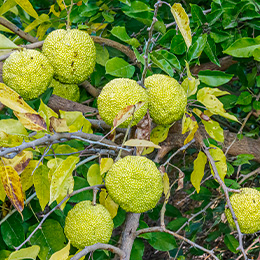
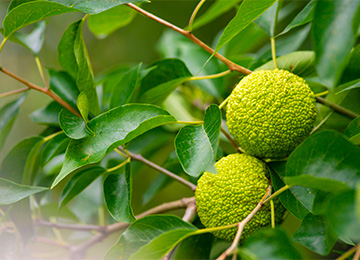
Historically, the Osage orange was used as a windbreak and defensive hedge. It is also known as the “hedge tree.” In the past, it was planted in the south of France to feed silkworms. It is renowned for its hard wood, which is used to make posts and tool handles, and for its unusual fruits, which turn yellow-green when ripe. They are about the size of a grapefruit, pleasantly aromatic, but inedible.

Did you know that the Osage Native American tribe used me to make bows? My wood is very strong and flexible, so I was perfect for making bows. They also used the juice from my fruit to paint their faces.
