The most colourful mammal
Having arrived straight from Madrid, I’m the new alpha male of this group. Still quite young, I’m trying to find my feet whilst respecting every member of the group.
I now live with four other mandrills from the same family: Dido, the big brother, with whom I get on brilliantly, especially when it comes to racing for food! Djibou, the big sister, is rather quiet, but I can have a nap with her without a care in the world. Douala, the youngest of the family, is bursting with energy and can’t sit still! And finally Dahia, the mum, who knows how to command respect when necessary.
In the enclosure, I’m often on the ground, as befits my role as the dominant male – I like to show off!
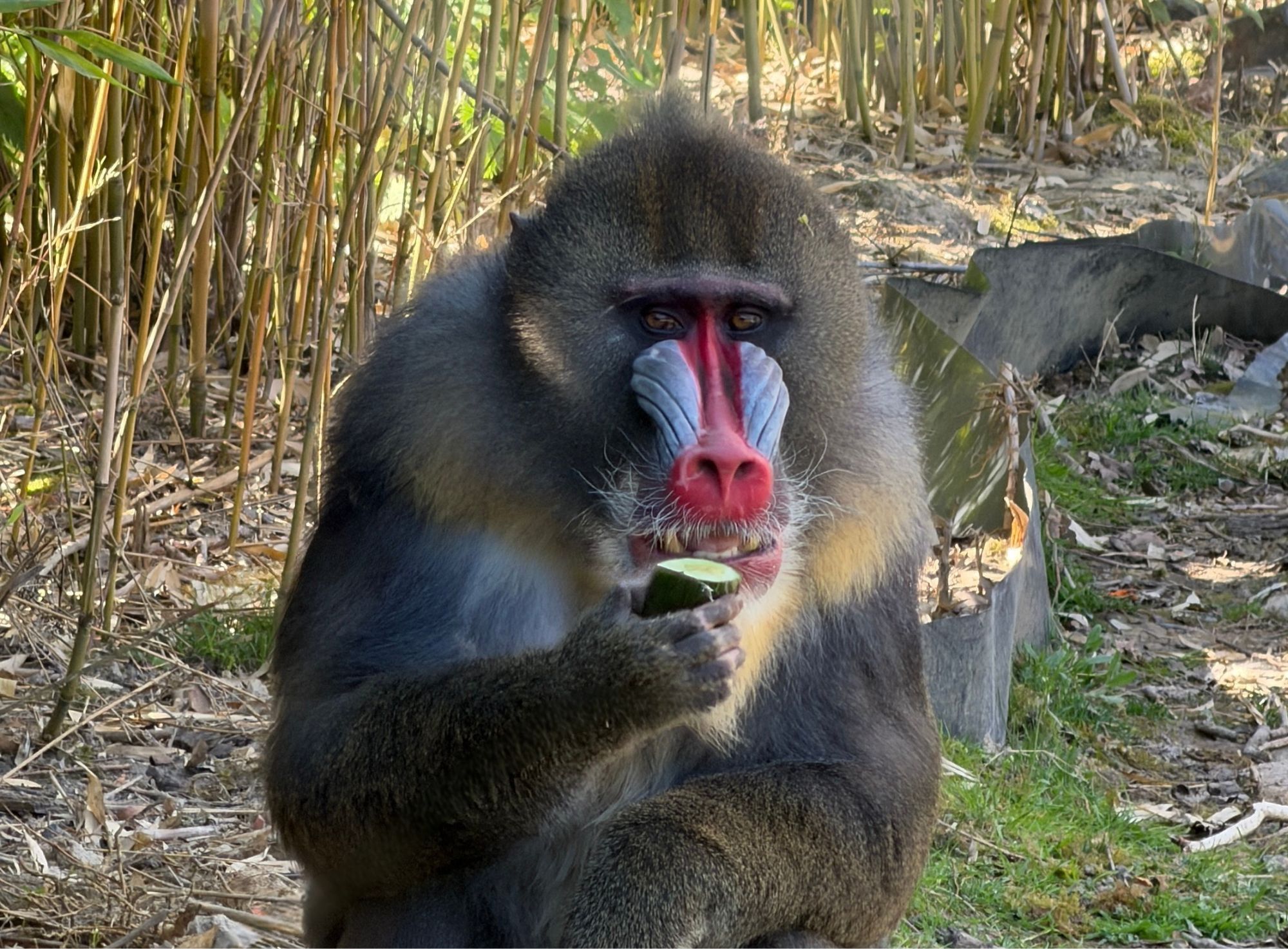
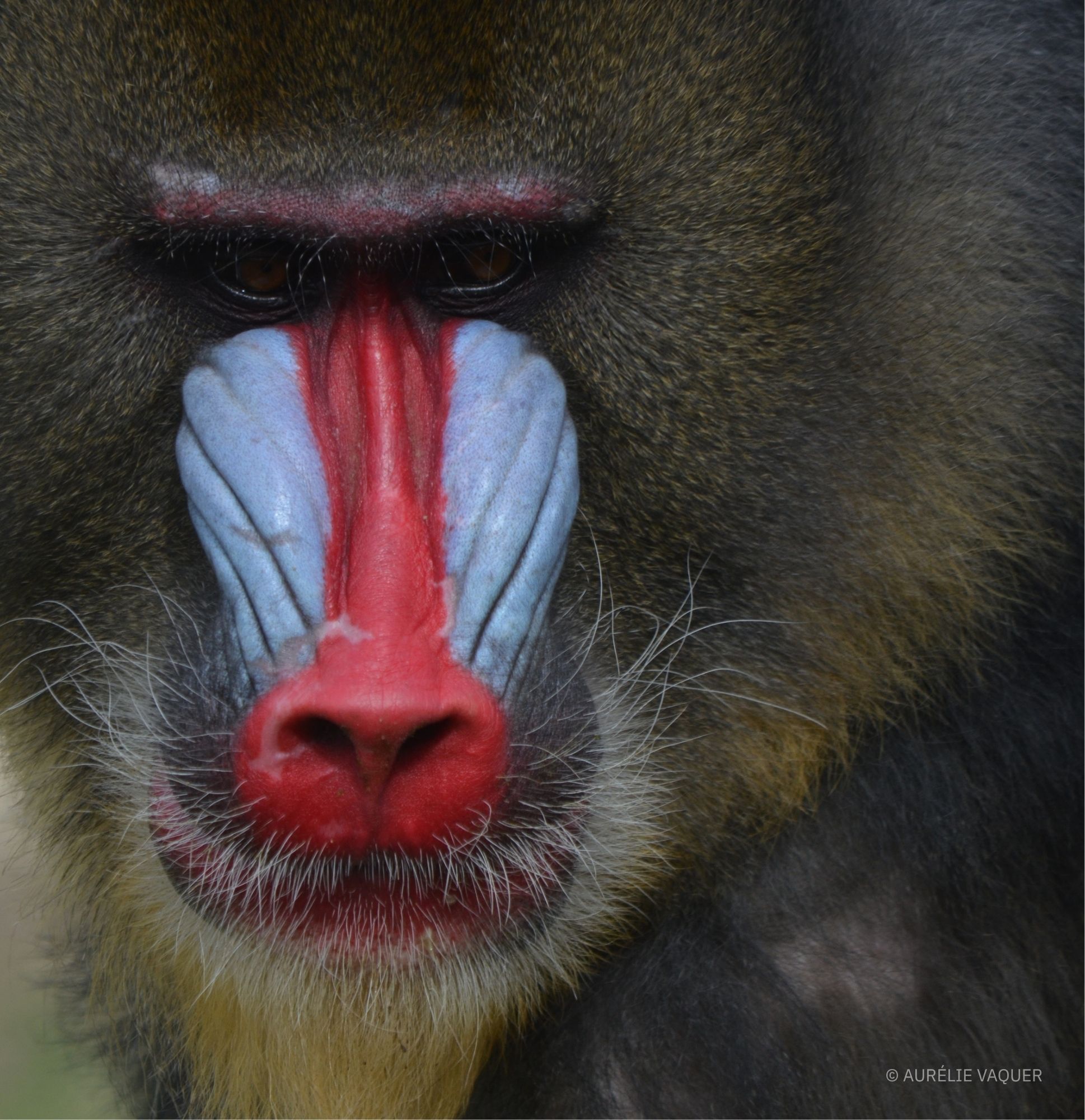
The colours of their masks serve as a means of communication between individuals: the higher a male’s position in the hierarchy, the brighter his colours. The dominant male’s highly conspicuous rear end serves as a landmark for the rest of the group, enabling them to follow him through the dense vegetation of the tropical forests.

Mandrills are threatened by habitat destruction and hunting. They are a source of food in many areas and are easily spotted in the sparsely wooded forests they inhabit.
Missions, actions, projects, partners, theme days ... Discover the latest news from The Le PAL Nature Foundation.
All the news